
First steps
The Brief
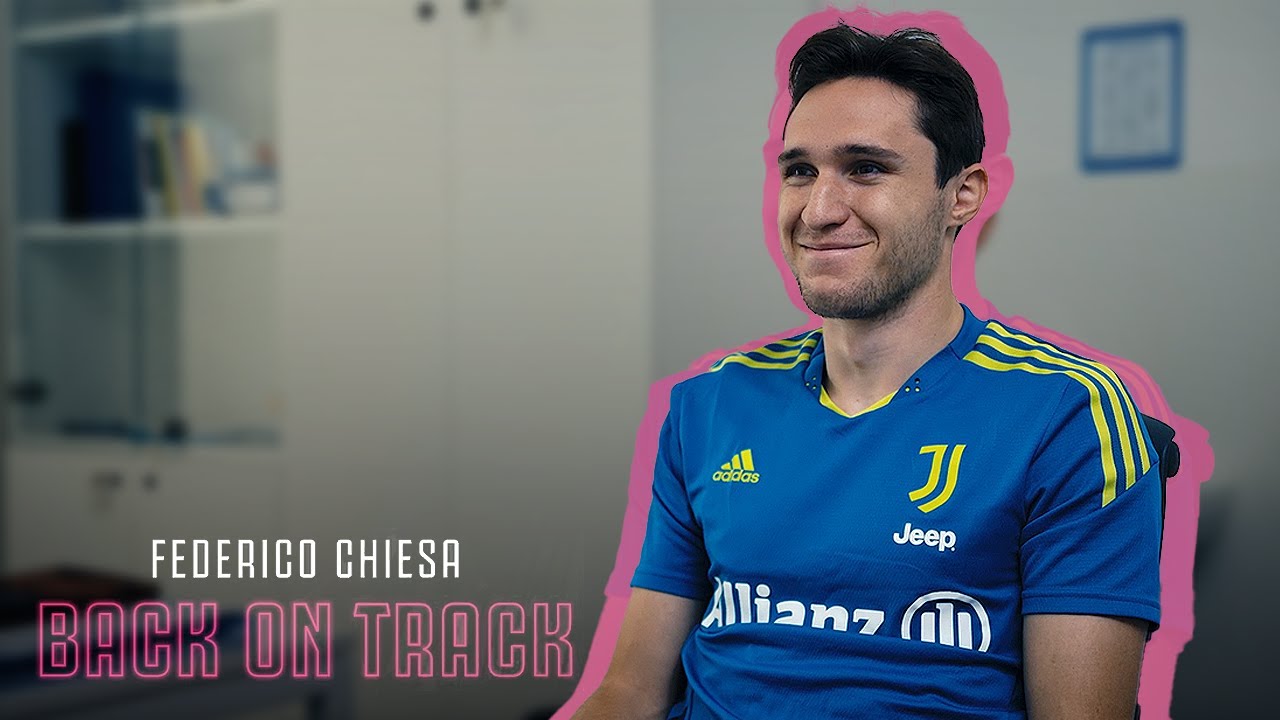
Scoring a psychological journey into traumatic memory asks something unusual of music: stay close to the person’s inner experience without dramatizing it. That was the challenge at the center of this scene from Back on Track, the Federico Chiesa documentary produced by Juventus Creator Lab for Amazon Prime Video.
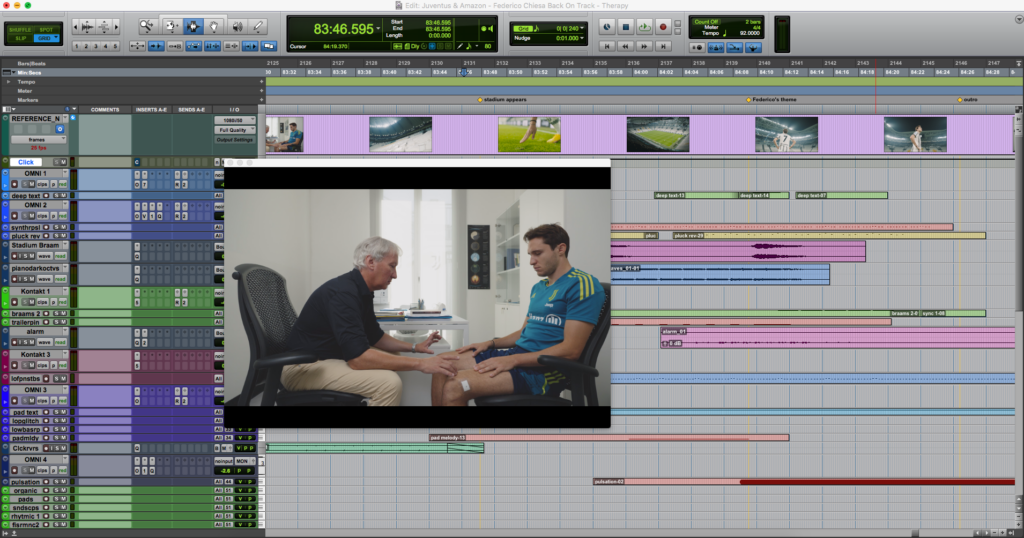
Federico is in an EFT therapy session, working through PTSD with a practitioner. The tapping technique guides him back in time toward the thing he fears most: the stadium, the moment of injury, the crowd that witnessed it all.
The director’s brief pointed toward something essential: a champion’s psychological battle after a career-threatening injury. The constant tension between the player who dominated Serie A and the man facing an uncertain future.
The Approach
Finding the emotional core
EFT therapy works through rhythm and repetition to move a person through emotional time. The music needed to do the same thing: follow that movement inward, into the memory. That parallel became the compositional foundation for the whole scene.
The question that shaped every choice: what does it feel like to travel backward through traumatic memory? What sound captures that distance from the present, that sensation of approaching something you’ve been trying to avoid?
“Federico is facing something much harder than a comeback.”
The Executive Producer
THE IDEA
Musical Architecture
The score for this scene rests on two elements
each serving a precise psychological function.
Explore the individual layers first, then hear how they work together
in the final scene.
A clock sound dropped two octaves and treated with heavy reverb. The tick stays recognizable but pitched down and blurred by the reverb tail it drifts away from the present. This is what EFT therapy actually does, moving the person through time rhythmically. The music mirrors that mechanism rather than illustrating it from the outside.
The stadium is the site of trauma. The sound design fx is large, pressurized and unsettling. Embedded inside it runs Federico’s melodic theme: the same melody that emerges at the trailer’s climax and returns throughout the film in different forms to track his emotional state. The stadium and his identity are inseparable. He cannot access who he is without passing through what he fears.
Sound design can carry narrative meaning.
The clock works in this scene because it mirrors the actual psychological mechanism of EFT therapy. The pitch drop and reverb tail do something specific: they create temporal distance without cutting the rhythmic thread.
A generic ambient texture would have done something,
but a clock treated this way does something precise.
The same principle applies to the stadium layer.
Hiding Federico’s theme inside the threat rather than placing it alongside it changes what the scene communicates.
Revisions
The Collaboration
Two rounds of revisions, both focused on the same issue: balance. How far below the surface should Federico’s theme sit inside the stadium layer? The margin between “the theme gives hope” and “the theme disappears entirely” was narrower than expected.
Juventus Creator Lab and I worked closely on picture, adjusting levels in real time and letting the image guide the mix. This is a partnership built over more than 10 years of active collaboration, and that shared language made the conversation fast and precise.
“Let the image breathe. Federico’s face says everything.
The music just needs to hold the space.”
The Director